
Native American Hoop Dance Event
The American Indian Success program is wrapping up Native American Heritage month with a Hoop Dancing performance from Lumhe "Micco" Sampson (of the Sampson Brothers) on Wednesday, November 25, noon–1 p.m. in T Plaza and on Zoom.
Native American Hoop Dance is a traditional Indigenous storytelling and healing dance. A solo dancer uses anywhere from one to 50 small hoops (traditionally made of reeds or wood) to create intricate shapes—such as butterflies, eagles, flowers, and the "world" formation—representing the never-ending circle of life and the connection of all living things.
Hoop dancing is not tied to just one tribe—it is an intertribal dance performed by Native dancers across North America, with roots and major milestones linked to several specific nations.
PLAN TO ATTEND!
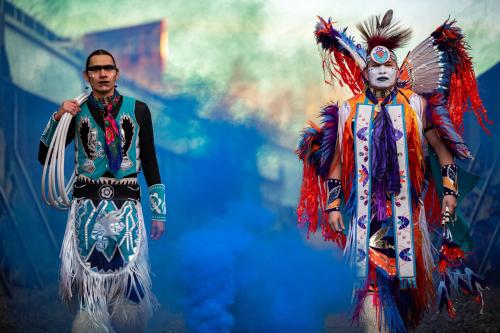
Sampson Brothers Bio
World-renowned dancers Lumhe and Samsoche Sampson (Mvskoke Creek/Seneca)—the Sampson Brothers, use art, education and dance to promote cultural pride, unity and hope. Through their work, they strive to set a positive example, challenge stereotypes and create opportunities for future generations.
The brothers are committed to giving back to their tribe and the Indigenous community by using their success as artists to educate others and keep their culture alive. Blending tradition with contemporary expression, they bridge two worlds and serve as positive role models for 21st-century generations.
Hoop dancing has been the brothers’ passion and artistic expression since they first learned the dance as young boys. They began with traditional powwow styles, including Grass and Fancy dance, and were encouraged to embrace a lifelong commitment to learning. That encouragement led them to discover hoop dancing and pick up their first hoops.
Initially, they shared hoop dancing with their peers at school assemblies. What began as an opportunity to educate others soon grew into a lifelong passion and profession. More than 25 years later, the Sampson Brothers have performed in more than six countries and at hundreds of universities, introducing thousands of people around the world to their culture and the art of Indigenous hoop dancing.